
Wellbriety is a culturally grounded recovery movement rooted in Indigenous teachings that views sobriety and overall wellness as inseparable, while the traditional 12-step approach is a peer-led mutual aid model built on surrender to a higher power, structured steps, and group accountability. Comparing Wellbriety vs. 12-step recovery helps you understand how each framework approaches healing, who they were designed to serve, and how they can sometimes work together.

If you are weighing your options, you are already doing meaningful work. Choosing a recovery path is personal, and there is no single correct answer. What matters most is finding an approach that fits your values, your background, and the kind of support you need to build a stable life.

This article walks through the foundations of both models, introduces the Medicine Wheel and Four Laws of Change, compares the two side by side, and offers practical questions to help you decide what may fit best.

Table of Contents

Key Takeaways

  • The 12-step model centers on peer support, surrender to a higher power, and progression through structured steps adapted from Alcoholics Anonymous and Narcotics Anonymous.
  • Wellbriety is a recovery movement founded in 1988 by Don Coyhis and supported by White Bison, Inc., grounded in Indigenous teachings like the Medicine Wheel and Four Laws of Change.
  • Wellbriety does not reject the 12 steps; The Red Road to Wellbriety adapts them within an Indigenous worldview, making the two approaches potentially complementary.
  • Wellbriety expands healing beyond the individual through the Healing Forest concept, viewing personal recovery as connected to family, community, and future generations.
  • Culturally grounded approaches can be integrated with evidence-informed therapies like CBT and DBT inside a structured residential program.

Two Paths, One Goal: Understanding Recovery Frameworks

Deciding to seek help is the single most important step in recovery. What comes after that decision can look different for different people, and the path you choose should fit who you are, what you believe, and how you heal best.

The traditional 12-step approach and the Wellbriety Movement are two well-known frameworks that share the same destination: lasting sobriety and a healthier life. They reach that destination through different roads. Understanding what each offers can help you make a thoughtful choice instead of defaulting to whatever feels most familiar.


What the 12-Step Model Is Built On

The 12-step model began with Alcoholics Anonymous (AA) in the 1930s and has since shaped countless mutual aid recovery programs, including Narcotics Anonymous (NA). It rests on the idea that addiction is a condition a person cannot overcome alone, and that healing comes through honesty, surrender, and connection with others walking the same path.


What Wellbriety Brings to the Conversation

Wellbriety is a recovery movement rooted in Indigenous wisdom. The word itself combines wellness and sobriety, signaling a core belief that you cannot truly be sober without also being well in mind, body, emotion, and spirit. It draws on cultural teachings, ceremony, and community in ways that the standard 12-step format does not.


Why the Comparison Matters for Your Recovery

Many people enter treatment having only heard of one approach, often the 12 steps. Knowing the alternatives, and how they relate to each other, gives you a fuller picture. It also helps families and loved ones understand why a culturally grounded option might better fit someone whose identity, history, or spiritual beliefs do not align with the conventional model.
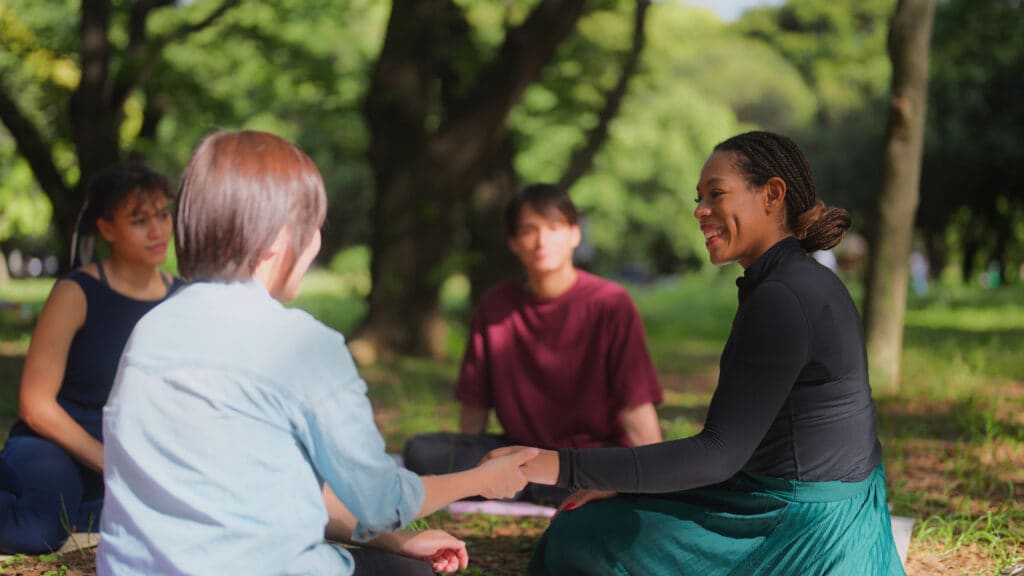
 

Diverse adults participating in an outdoor recovery support circle focused on connection and shared healing.

The Traditional 12-Step Approach: Structure, Surrender, and Community

Few recovery frameworks have shaped the cultural understanding of addiction more than the 12 steps. For many people, it has been the doorway into a sober life, and its influence shows up everywhere from inpatient treatment to community meetings to popular media.


The Core Philosophy Behind the 12 Steps

At its heart, the 12-step model teaches that addiction is a condition over which a person is powerless, and that recovery begins by accepting that fact. From there, the steps guide a person through a process of self-examination, making amends, and turning toward a higher power, however that is personally understood. The philosophy is spiritual but not tied to any one religion.


How 12-Step Groups Function in Practice

12-step groups meet regularly in community settings, often daily in larger cities. Members share their experiences, work through the steps with a sponsor, and lean on the group for accountability. There are no fees, no formal leaders, and no clinical structure. The model relies on peer support, anonymity, and consistent attendance.


Who Tends to Benefit Most from This Model

People who feel grounded by routine, value peer accountability, and find comfort in shared spiritual language often do well with 12-step participation. The widespread availability of meetings makes it accessible almost anywhere, and many find lifelong community through it.


Limitations Some People Encounter with 12-Step Programs

The model does not work equally well for everyone. Some people struggle with the language of powerlessness, while others find the higher-power framework difficult to reconcile with their beliefs. For individuals whose cultural identity, history of intergenerational trauma, or spiritual practices fall outside the model’s origins, the experience can feel disconnected from how they understand healing.


What Is Wellbriety? Wellness, Sobriety, and Cultural Identity

Wellbriety is not a rebranded 12-step program. It is a culturally grounded approach to healing the whole person, built on the idea that sobriety alone is not enough. True recovery, in this view, means being well in every part of life, and that wellness is rooted in connection to culture, community, and spirit.


The Origins of the Wellbriety Movement

The Wellbriety Movement was founded in 1988 by Don Coyhis and is supported by White Bison, Inc., a nonprofit organization that develops culturally appropriate recovery resources for Native American and Alaska Native communities. A guiding principle of the movement is “Our culture is prevention,” reflecting the belief that reconnecting to Indigenous values, ceremonies, and spiritual practices supports both personal and community-level healing.


The Four Laws of Change and What They Mean

The Four Laws of Change are guiding principles within Wellbriety that describe how lasting transformation happens. In broad terms, they teach that change is preceded by a vision, must come from within, requires a healing of relationships, and unfolds in cycles rather than straight lines. These principles shape how individuals approach their own recovery work and how communities support one another.


The Medicine Wheel as a Recovery Framework

The Medicine Wheel is a traditional Indigenous symbol used in Wellbriety to represent balance among four dimensions of a person: mental, emotional, physical, and spiritual. In recovery, the wheel becomes a framework for examining where a person is out of balance and what kind of healing is needed in each area. White Bison offers separate Medicine Wheel and 12 Steps programs for men, women, and youth ages 13 to 21, with the youth program specifically focused on the emotional, mental, physical, and spiritual foundations that contribute to substance use.


The Concept of the Healing Forest: Individual and Community Recovery

Wellbriety extends healing beyond the individual through the concept of the Healing Forest, where each person’s recovery contributes to the strength of the broader community. The image is simple: a sick tree returning to a sick forest will get sick again. Healing must happen at both the individual and community levels, with an emphasis on creating change for the next seven generations.


How Wellbriety and the 12 Steps Relate to Each Other

A common misunderstanding is that Wellbriety and the 12 steps are competing programs. In reality, the relationship is more layered and, for many people, more useful.


The Red Road to Wellbriety: Adapting the Steps Through Indigenous Teachings

The Red Road to Wellbriety integrates Native traditions with the Twelve Steps of recovery, adapting them within an Indigenous worldview aligned with teachings like the Medicine Wheel and the Four Directions rather than replacing the steps entirely. This means a person can engage with the spiritual and practical work of the steps while staying grounded in their cultural identity.


Sharing Circles, Storytelling, and Community-Based Accountability

Where a traditional 12-step meeting follows a predictable format of readings and individual shares, Wellbriety gatherings often use sharing circles and storytelling. The circle reflects equality and connection, and stories carry teaching value across generations. Accountability still matters, but it is woven into relationships, ceremony, and shared cultural understanding rather than structured around sponsor-sponsee dynamics alone.


Where the Two Approaches Diverge in Philosophy and Practice

The 12-step approach focuses primarily on the individual’s relationship with their addiction and a higher power. Wellbriety widens the lens to include family, community, and ancestors. It also names intergenerational trauma directly as something recovery must address, which the original 12-step framework does not explicitly do.


Comparing the Two Approaches Side by Side

Reading about each model separately is helpful, but a direct comparison makes the differences and the overlap easier to see. The table below highlights how the two frameworks approach key dimensions of recovery.

Dimension 12-Step Approach Wellbriety
Spiritual foundation Higher power, personally defined Indigenous teachings, ceremony, Medicine Wheel
Cultural grounding Universal, not culture-specific Rooted in Native American and Indigenous traditions
Group format Structured meetings with readings and shares Sharing circles, storytelling, ceremony
View of personal agency Begins with acknowledging powerlessness Emphasizes vision, choice, and inner change
Scope of healing Primarily individual sobriety Individual, family, community, and generational
Role of trauma Addressed through steps and sponsorship Intergenerational trauma named directly

Spiritual Foundation: Higher Power vs. Indigenous Teachings

The 12 steps invite each person to define a higher power in their own way. Wellbriety draws on specific Indigenous teachings, ceremonies, and symbols, offering a spiritual foundation already shaped by culture rather than left open-ended.


Personal Agency and Responsibility in Each Model

Both approaches ask the person in recovery to take responsibility for their choices. The 12 steps begin with acknowledging powerlessness over the substance, while Wellbriety frames change as something that starts from within and grows outward, guided by vision and connection to cultural identity.


Scope of Healing: Individual Sobriety vs. Generational Wellness

The 12-step model is focused on the individual’s sobriety, with the family benefiting secondarily. Wellbriety places healing in a wider circle that includes family lines, community, and future generations. For people carrying the weight of intergenerational trauma, that wider scope can feel essential.

Wondering whether a culturally grounded program might be right for you or your loved one? We are happy to talk through your options at your pace and answer any questions. You can learn more about our Wellbriety-informed recovery programming or reach out whenever you are ready.


Who Each Approach Is Designed to Serve

The 12-step model was designed to be accessible to anyone willing to participate. Wellbriety was created specifically for Native American and Alaska Native communities, though its teachings have resonated with non-Indigenous people seeking a spiritually grounded, culturally connected path. Whether it is the right fit for someone outside the Indigenous community is a personal question worth exploring with care and respect.


Choosing the Right Path: What to Consider

There is no checklist that tells you which recovery model is right. There are, however, questions that can help you reflect honestly on what you need.


Questions to Ask Yourself Before Choosing a Recovery Model

  • What role does spirituality play in your life? A higher-power framework, an Indigenous spiritual tradition, or a more secular path may each feel different to you.
  • How important is cultural identity to your healing? If reconnecting with cultural roots is central to who you are becoming, that should shape your choice.
  • What kind of community do you want around you? Consider whether you are drawn to large, easily accessible meetings or smaller, ceremony-centered circles.
  • What has your prior treatment experience taught you? Past programs, even ones that did not stick, can point you toward what was missing.


When a Culturally Grounded Approach May Be the Right Fit

If you carry intergenerational trauma, identify with Indigenous heritage, or feel that previous programs did not honor the fuller picture of your life, a culturally grounded path may resonate more deeply. Some people also find that pairing Wellbriety teachings with 12-step participation gives them both the cultural grounding and the daily structure they need.


How Holistic and Integrated Treatment Can Support Either Path

Whichever framework speaks to you, recovery is rarely a solo project. A residential setting that combines clinical therapy with culturally informed support can help you build on either foundation. Approaches like CBT, DBT skills training, EMDR, and family therapy often work alongside spiritual and cultural practices rather than in competition with them. A holistic treatment approach addresses the mental, emotional, physical, and spiritual aspects of healing in a way that mirrors the balance the Medicine Wheel represents.


How Cypress Lake Recovery Supports Culturally Informed Healing

Our program in East Texas is built on the belief that recovery has to address the whole person. That means giving you space to heal mentally, emotionally, physically, and spiritually, while also offering the structure and clinical support that residential care provides.


Wellbriety as Part of a Whole-Person Treatment Approach

We view Wellbriety teachings as one important part of how a person can rebuild. Within a structured residential setting, culturally grounded healing can sit alongside individual therapy, group work, and wellness programming, supporting the same goal from different angles. You can read more about how we incorporate Wellbriety teachings into our residential program.


Integrated Therapies That Complement Cultural Healing

Our clinical team uses evidence-informed therapies such as CBT, DBT, EMDR, and family therapy, paired with experiential and holistic services. For clients managing both substance use and mental health conditions, our dual diagnosis approach addresses both at once, which is often necessary for lasting recovery. We also build out individualized recovery and relapse prevention planning so that the work you do here continues after you go home.


Taking the Next Step Toward Recovery

Choosing a recovery model is one decision among many you will make on this path. The most important one, picking up the phone or sending the first message, is the one only you can take. When you are ready, we are here to walk you through what comes next.


Frequently Asked Questions

Wellbriety was created specifically for Native American and Alaska Native communities, but its teachings have also resonated with non-Indigenous people seeking a spiritually grounded, culturally connected approach to recovery. Anyone considering Wellbriety is encouraged to engage with its teachings respectfully and to recognize their Indigenous origins. For those outside the Indigenous community, Wellbriety can be a meaningful complement to other recovery work rather than a replacement for their own cultural traditions.

Yes, many people participate in both, and the two approaches are often considered complementary rather than competing. The Red Road to Wellbriety adapts the Twelve Steps within an Indigenous worldview rather than replacing them, which makes pairing the two feel natural for some. Combining them can offer both the daily structure of 12-step meetings and the cultural grounding of Wellbriety teachings.

The Four Laws of Change are guiding principles within Wellbriety that describe how lasting transformation happens. In broad terms, they teach that change is preceded by a vision, must come from within, requires a healing of relationships, and unfolds in cycles rather than straight lines. These principles are used to guide both personal recovery work and community-level healing efforts.

The Medicine Wheel is a traditional Indigenous symbol used in Wellbriety to represent balance among four dimensions of a person: mental, emotional, physical, and spiritual. In recovery, it serves as a framework for examining where a person is out of balance and what kind of healing each area needs. It encourages a whole-person view of sobriety rather than focusing only on substance use behaviors.

Wellbriety is best understood as a culturally grounded recovery movement rather than a standalone clinical treatment, and research into culturally adapted recovery approaches continues to grow. Many treatment programs integrate Wellbriety teachings alongside evidence-informed therapies like CBT, DBT, and EMDR. This kind of integrated approach can support both clinical progress and cultural healing within the same program.

The Red Road to Wellbriety is an approach that integrates Native traditions with the Twelve Steps of recovery, adapting them within an Indigenous worldview. It aligns the steps with teachings like the Medicine Wheel and the Four Directions rather than replacing them entirely. For many people, it offers a way to engage the practical and spiritual work of recovery while remaining grounded in cultural identity.

Talk With Our Team When You Are Ready

If you want to understand how culturally grounded recovery, evidence-informed therapy, and residential care can come together in one program, we would be glad to talk with you. Our admissions team can answer your questions, explain options, and help you think through what might fit best. Reach out to Cypress Lake Recovery whenever you are ready to take the next step.

Accessibility Toolbar

Wellbriety vs. the Traditional 12-Step Approach

Wellbriety is a culturally grounded recovery movement rooted in Indigenous teachings that views sobriety and overall wellness as inseparable, while the traditional 12-step approach is a peer-led mutual aid model built on surrender to a higher power, structured steps, and group accountability. Comparing Wellbriety vs. 12-step recovery helps you understand how each framework approaches healing, who they were designed to serve, and how they can sometimes work together.

If you are weighing your options, you are already doing meaningful work. Choosing a recovery path is personal, and there is no single correct answer. What matters most is finding an approach that fits your values, your background, and the kind of support you need to build a stable life.

This article walks through the foundations of both models, introduces the Medicine Wheel and Four Laws of Change, compares the two side by side, and offers practical questions to help you decide what may fit best.

  • The 12-step model centers on peer support, surrender to a higher power, and progression through structured steps adapted from Alcoholics Anonymous and Narcotics Anonymous.
  • Wellbriety is a recovery movement founded in 1988 by Don Coyhis and supported by White Bison, Inc., grounded in Indigenous teachings like the Medicine Wheel and Four Laws of Change.
  • Wellbriety does not reject the 12 steps; The Red Road to Wellbriety adapts them within an Indigenous worldview, making the two approaches potentially complementary.
  • Wellbriety expands healing beyond the individual through the Healing Forest concept, viewing personal recovery as connected to family, community, and future generations.
  • Culturally grounded approaches can be integrated with evidence-informed therapies like CBT and DBT inside a structured residential program.

Two Paths, One Goal: Understanding Recovery Frameworks

Deciding to seek help is the single most important step in recovery. What comes after that decision can look different for different people, and the path you choose should fit who you are, what you believe, and how you heal best.

The traditional 12-step approach and the Wellbriety Movement are two well-known frameworks that share the same destination: lasting sobriety and a healthier life. They reach that destination through different roads. Understanding what each offers can help you make a thoughtful choice instead of defaulting to whatever feels most familiar.


What the 12-Step Model Is Built On

The 12-step model began with Alcoholics Anonymous (AA) in the 1930s and has since shaped countless mutual aid recovery programs, including Narcotics Anonymous (NA). It rests on the idea that addiction is a condition a person cannot overcome alone, and that healing comes through honesty, surrender, and connection with others walking the same path.


What Wellbriety Brings to the Conversation

Wellbriety is a recovery movement rooted in Indigenous wisdom. The word itself combines wellness and sobriety, signaling a core belief that you cannot truly be sober without also being well in mind, body, emotion, and spirit. It draws on cultural teachings, ceremony, and community in ways that the standard 12-step format does not.


Why the Comparison Matters for Your Recovery

Many people enter treatment having only heard of one approach, often the 12 steps. Knowing the alternatives, and how they relate to each other, gives you a fuller picture. It also helps families and loved ones understand why a culturally grounded option might better fit someone whose identity, history, or spiritual beliefs do not align with the conventional model.


Diverse adults participating in an outdoor recovery support circle focused on connection and shared healing.

The Traditional 12-Step Approach: Structure, Surrender, and Community

Few recovery frameworks have shaped the cultural understanding of addiction more than the 12 steps. For many people, it has been the doorway into a sober life, and its influence shows up everywhere from inpatient treatment to community meetings to popular media.


The Core Philosophy Behind the 12 Steps

At its heart, the 12-step model teaches that addiction is a condition over which a person is powerless, and that recovery begins by accepting that fact. From there, the steps guide a person through a process of self-examination, making amends, and turning toward a higher power, however that is personally understood. The philosophy is spiritual but not tied to any one religion.


How 12-Step Groups Function in Practice

12-step groups meet regularly in community settings, often daily in larger cities. Members share their experiences, work through the steps with a sponsor, and lean on the group for accountability. There are no fees, no formal leaders, and no clinical structure. The model relies on peer support, anonymity, and consistent attendance.


Who Tends to Benefit Most from This Model

People who feel grounded by routine, value peer accountability, and find comfort in shared spiritual language often do well with 12-step participation. The widespread availability of meetings makes it accessible almost anywhere, and many find lifelong community through it.


Limitations Some People Encounter with 12-Step Programs

The model does not work equally well for everyone. Some people struggle with the language of powerlessness, while others find the higher-power framework difficult to reconcile with their beliefs. For individuals whose cultural identity, history of intergenerational trauma, or spiritual practices fall outside the model's origins, the experience can feel disconnected from how they understand healing.


What Is Wellbriety? Wellness, Sobriety, and Cultural Identity

Wellbriety is not a rebranded 12-step program. It is a culturally grounded approach to healing the whole person, built on the idea that sobriety alone is not enough. True recovery, in this view, means being well in every part of life, and that wellness is rooted in connection to culture, community, and spirit.


The Origins of the Wellbriety Movement

The Wellbriety Movement was founded in 1988 by Don Coyhis and is supported by White Bison, Inc., a nonprofit organization that develops culturally appropriate recovery resources for Native American and Alaska Native communities. A guiding principle of the movement is "Our culture is prevention," reflecting the belief that reconnecting to Indigenous values, ceremonies, and spiritual practices supports both personal and community-level healing.


The Four Laws of Change and What They Mean

The Four Laws of Change are guiding principles within Wellbriety that describe how lasting transformation happens. In broad terms, they teach that change is preceded by a vision, must come from within, requires a healing of relationships, and unfolds in cycles rather than straight lines. These principles shape how individuals approach their own recovery work and how communities support one another.


The Medicine Wheel as a Recovery Framework

The Medicine Wheel is a traditional Indigenous symbol used in Wellbriety to represent balance among four dimensions of a person: mental, emotional, physical, and spiritual. In recovery, the wheel becomes a framework for examining where a person is out of balance and what kind of healing is needed in each area. White Bison offers separate Medicine Wheel and 12 Steps programs for men, women, and youth ages 13 to 21, with the youth program specifically focused on the emotional, mental, physical, and spiritual foundations that contribute to substance use.


The Concept of the Healing Forest: Individual and Community Recovery

Wellbriety extends healing beyond the individual through the concept of the Healing Forest, where each person's recovery contributes to the strength of the broader community. The image is simple: a sick tree returning to a sick forest will get sick again. Healing must happen at both the individual and community levels, with an emphasis on creating change for the next seven generations.


How Wellbriety and the 12 Steps Relate to Each Other

A common misunderstanding is that Wellbriety and the 12 steps are competing programs. In reality, the relationship is more layered and, for many people, more useful.


The Red Road to Wellbriety: Adapting the Steps Through Indigenous Teachings

The Red Road to Wellbriety integrates Native traditions with the Twelve Steps of recovery, adapting them within an Indigenous worldview aligned with teachings like the Medicine Wheel and the Four Directions rather than replacing the steps entirely. This means a person can engage with the spiritual and practical work of the steps while staying grounded in their cultural identity.


Sharing Circles, Storytelling, and Community-Based Accountability

Where a traditional 12-step meeting follows a predictable format of readings and individual shares, Wellbriety gatherings often use sharing circles and storytelling. The circle reflects equality and connection, and stories carry teaching value across generations. Accountability still matters, but it is woven into relationships, ceremony, and shared cultural understanding rather than structured around sponsor-sponsee dynamics alone.


Where the Two Approaches Diverge in Philosophy and Practice

The 12-step approach focuses primarily on the individual's relationship with their addiction and a higher power. Wellbriety widens the lens to include family, community, and ancestors. It also names intergenerational trauma directly as something recovery must address, which the original 12-step framework does not explicitly do.


Comparing the Two Approaches Side by Side

Reading about each model separately is helpful, but a direct comparison makes the differences and the overlap easier to see. The table below highlights how the two frameworks approach key dimensions of recovery.

Dimension 12-Step Approach Wellbriety
Spiritual foundation Higher power, personally defined Indigenous teachings, ceremony, Medicine Wheel
Cultural grounding Universal, not culture-specific Rooted in Native American and Indigenous traditions
Group format Structured meetings with readings and shares Sharing circles, storytelling, ceremony
View of personal agency Begins with acknowledging powerlessness Emphasizes vision, choice, and inner change
Scope of healing Primarily individual sobriety Individual, family, community, and generational
Role of trauma Addressed through steps and sponsorship Intergenerational trauma named directly

Spiritual Foundation: Higher Power vs. Indigenous Teachings

The 12 steps invite each person to define a higher power in their own way. Wellbriety draws on specific Indigenous teachings, ceremonies, and symbols, offering a spiritual foundation already shaped by culture rather than left open-ended.


Personal Agency and Responsibility in Each Model

Both approaches ask the person in recovery to take responsibility for their choices. The 12 steps begin with acknowledging powerlessness over the substance, while Wellbriety frames change as something that starts from within and grows outward, guided by vision and connection to cultural identity.


Scope of Healing: Individual Sobriety vs. Generational Wellness

The 12-step model is focused on the individual's sobriety, with the family benefiting secondarily. Wellbriety places healing in a wider circle that includes family lines, community, and future generations. For people carrying the weight of intergenerational trauma, that wider scope can feel essential.

Wondering whether a culturally grounded program might be right for you or your loved one? We are happy to talk through your options at your pace and answer any questions. You can learn more about our Wellbriety-informed recovery programming or reach out whenever you are ready.


Who Each Approach Is Designed to Serve

The 12-step model was designed to be accessible to anyone willing to participate. Wellbriety was created specifically for Native American and Alaska Native communities, though its teachings have resonated with non-Indigenous people seeking a spiritually grounded, culturally connected path. Whether it is the right fit for someone outside the Indigenous community is a personal question worth exploring with care and respect.


Choosing the Right Path: What to Consider

There is no checklist that tells you which recovery model is right. There are, however, questions that can help you reflect honestly on what you need.


Questions to Ask Yourself Before Choosing a Recovery Model

  • What role does spirituality play in your life? A higher-power framework, an Indigenous spiritual tradition, or a more secular path may each feel different to you.
  • How important is cultural identity to your healing? If reconnecting with cultural roots is central to who you are becoming, that should shape your choice.
  • What kind of community do you want around you? Consider whether you are drawn to large, easily accessible meetings or smaller, ceremony-centered circles.
  • What has your prior treatment experience taught you? Past programs, even ones that did not stick, can point you toward what was missing.


When a Culturally Grounded Approach May Be the Right Fit

If you carry intergenerational trauma, identify with Indigenous heritage, or feel that previous programs did not honor the fuller picture of your life, a culturally grounded path may resonate more deeply. Some people also find that pairing Wellbriety teachings with 12-step participation gives them both the cultural grounding and the daily structure they need.


How Holistic and Integrated Treatment Can Support Either Path

Whichever framework speaks to you, recovery is rarely a solo project. A residential setting that combines clinical therapy with culturally informed support can help you build on either foundation. Approaches like CBT, DBT skills training, EMDR, and family therapy often work alongside spiritual and cultural practices rather than in competition with them. A holistic treatment approach addresses the mental, emotional, physical, and spiritual aspects of healing in a way that mirrors the balance the Medicine Wheel represents.


How Cypress Lake Recovery Supports Culturally Informed Healing

Our program in East Texas is built on the belief that recovery has to address the whole person. That means giving you space to heal mentally, emotionally, physically, and spiritually, while also offering the structure and clinical support that residential care provides.


Wellbriety as Part of a Whole-Person Treatment Approach

We view Wellbriety teachings as one important part of how a person can rebuild. Within a structured residential setting, culturally grounded healing can sit alongside individual therapy, group work, and wellness programming, supporting the same goal from different angles. You can read more about how we incorporate Wellbriety teachings into our residential program.


Integrated Therapies That Complement Cultural Healing

Our clinical team uses evidence-informed therapies such as CBT, DBT, EMDR, and family therapy, paired with experiential and holistic services. For clients managing both substance use and mental health conditions, our dual diagnosis approach addresses both at once, which is often necessary for lasting recovery. We also build out individualized recovery and relapse prevention planning so that the work you do here continues after you go home.


Taking the Next Step Toward Recovery

Choosing a recovery model is one decision among many you will make on this path. The most important one, picking up the phone or sending the first message, is the one only you can take. When you are ready, we are here to walk you through what comes next.


Frequently Asked Questions

Wellbriety was created specifically for Native American and Alaska Native communities, but its teachings have also resonated with non-Indigenous people seeking a spiritually grounded, culturally connected approach to recovery. Anyone considering Wellbriety is encouraged to engage with its teachings respectfully and to recognize their Indigenous origins. For those outside the Indigenous community, Wellbriety can be a meaningful complement to other recovery work rather than a replacement for their own cultural traditions.

Yes, many people participate in both, and the two approaches are often considered complementary rather than competing. The Red Road to Wellbriety adapts the Twelve Steps within an Indigenous worldview rather than replacing them, which makes pairing the two feel natural for some. Combining them can offer both the daily structure of 12-step meetings and the cultural grounding of Wellbriety teachings.

The Four Laws of Change are guiding principles within Wellbriety that describe how lasting transformation happens. In broad terms, they teach that change is preceded by a vision, must come from within, requires a healing of relationships, and unfolds in cycles rather than straight lines. These principles are used to guide both personal recovery work and community-level healing efforts.

The Medicine Wheel is a traditional Indigenous symbol used in Wellbriety to represent balance among four dimensions of a person: mental, emotional, physical, and spiritual. In recovery, it serves as a framework for examining where a person is out of balance and what kind of healing each area needs. It encourages a whole-person view of sobriety rather than focusing only on substance use behaviors.

Wellbriety is best understood as a culturally grounded recovery movement rather than a standalone clinical treatment, and research into culturally adapted recovery approaches continues to grow. Many treatment programs integrate Wellbriety teachings alongside evidence-informed therapies like CBT, DBT, and EMDR. This kind of integrated approach can support both clinical progress and cultural healing within the same program.

The Red Road to Wellbriety is an approach that integrates Native traditions with the Twelve Steps of recovery, adapting them within an Indigenous worldview. It aligns the steps with teachings like the Medicine Wheel and the Four Directions rather than replacing them entirely. For many people, it offers a way to engage the practical and spiritual work of recovery while remaining grounded in cultural identity.

Talk With Our Team When You Are Ready

If you want to understand how culturally grounded recovery, evidence-informed therapy, and residential care can come together in one program, we would be glad to talk with you. Our admissions team can answer your questions, explain options, and help you think through what might fit best. Reach out to Cypress Lake Recovery whenever you are ready to take the next step.

Table of Contents

Table of Contents
Scroll to Top